
PHONES · PRACTICAL GUIDE
How to compare phone specifications without being misled
 By S. Dahani · Founder & Publication Director
A specification sheet becomes useful only when every number is connected to a real task, regional compatibility and long-term support.
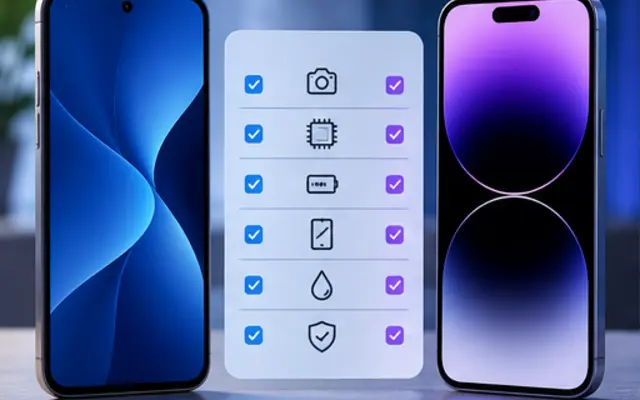
Quick Take
Display: brightness matters more than a fashionable label
Resolution, refresh rate and panel type matter, but outdoor readability, minimum brightness at night and colour accuracy can change daily comfort more. Compare independently measured brightness and check whether the high refresh rate works across normal apps—not only menus.
Camera: megapixels are not image quality
Sensor size, lens quality, stabilization, processing and consistency between the main, ultrawide and telephoto cameras all matter. Look at full-resolution samples in daylight, indoors and at night. Video stabilization, microphone quality and focus reliability deserve separate attention.
Battery: compare the same kind of test
Manufacturer video-playback claims cannot be compared directly with mixed daily use. Prefer repeated web, video, camera and standby tests under similar conditions. Charging speed also depends on the charger, cable, temperature and regional power standard.
Performance: buy for the work you do
A faster processor helps demanding games, video editing and longer-term responsiveness. For messaging, maps, payments and ordinary photography, storage capacity, memory management and software quality may make a larger practical difference.
Updates and repairability
Check the promised years of operating-system and security updates, the availability of authorised repairs and the price of a battery or screen replacement. A cheaper phone can cost more if support ends early.
Regional compatibility and warranty
The same phone name may hide different network bands, SIM options or features in different countries. Confirm the exact model number, 4G and 5G bands, eSIM availability, call recording rules and whether the local warranty is valid before importing.
Sources
Start with the use case, not the specification sheet
Before comparing models, write down the two or three jobs the product must do well. That simple step prevents an impressive specification from becoming the reason to buy something that does not fit daily use. For How to compare phone specifications without being misled, the useful comparison is the one tied to your own environment, frequency of use and existing devices. Separate essential requirements from conveniences, then decide which compromises you can accept. This also makes price comparisons fairer because you are comparing products that solve the same problem.
Compare measurable criteria on equal terms
Marketing pages often highlight the strongest number and hide the conditions behind it. Compare the same capacity, version, region, warranty and included accessories. When a claim depends on a particular mode, test condition or subscription, record that condition beside the number. For How to compare phone specifications without being misled, a short table with three candidates is usually more useful than opening many tabs: list the criteria that affect daily experience, mark unknown information, and treat missing specifications as something to verify rather than something to guess.
Check compatibility and the full ownership cost
The purchase price is only the first line of the budget. Include required accessories, subscriptions, replacement parts, electricity or charging where relevant, repairability and the likely support period. Compatibility can create hidden costs too: connectors, operating systems, account requirements and regional versions may determine whether a feature actually works. A product that costs slightly more at checkout can be the better value when it avoids adapters, recurring fees or an early replacement.
Treat privacy, security and updates as product features
Connected products should be judged by the information they collect as well as by what they can do. Review account requirements, permissions, cloud dependence, update policy and the process for deleting data. Prefer the minimum permissions needed for the feature you use. If the manufacturer does not clearly explain support or security updates, include that uncertainty in the buying decision. Long-term software support matters because a device can remain physically functional after its online services or security maintenance have changed.
Use independent evidence and verify important claims
A strong decision combines manufacturer documentation with independent testing and recent owner experience. Manufacturer pages are best for official specifications and support policies; independent tests can reveal performance under repeatable conditions; owner reports can expose recurring practical problems. Do not let one review decide the purchase. Look for agreement across several sources, pay attention to the exact model and software version, and give more weight to evidence that explains how a result was measured.
Make the final decision with a short checklist
Before paying, confirm the exact model, seller, return window, warranty, delivery terms and total price. Save the product page or order confirmation for expensive purchases. If two options remain close, choose according to the factor you will notice every day rather than the feature that looks best in an advertisement. A good purchase should still make sense after the urgency of a promotion disappears. If an essential point remains unclear, waiting for a verifiable answer is a valid decision.