
WEARABLES · BUYING GUIDE
Best AI and smart glasses in 2026: which pair should you buy?
 By S. Dahani and the RealDigitalTech editorial team
Ray-Ban Meta, Oakley Meta Vanguard, Meta Ray-Ban Display, Even Realities G2, Viture and Xreal. The three kinds of smart glasses explained, with prices, battery life and the best pick for each use.
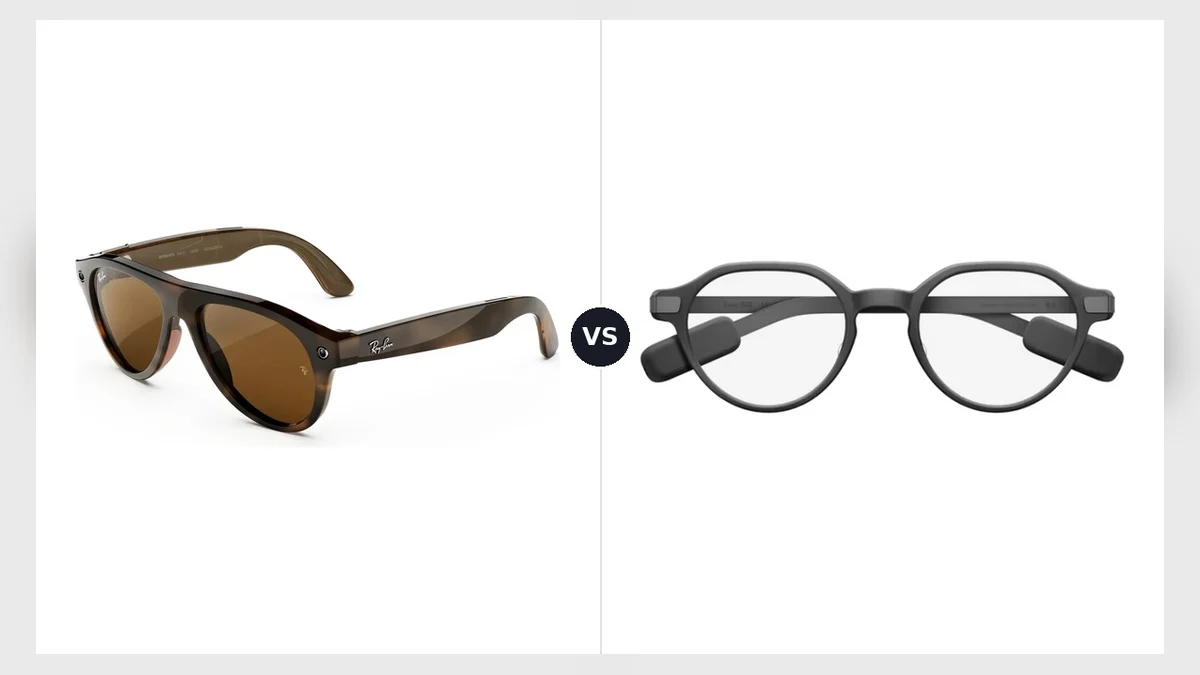
© Meta / EssilorLuxottica, Even Realities
Quick Take
Key figures
Three kinds of smart glasses
"Smart glasses" covers very different products in 2026. Before choosing a pair, decide which of these three you need:
- AI glasses without a screen: they look like normal glasses or sunglasses, with a camera, speakers and microphones in the frame. You take photos and videos, listen to music, take calls and ask an AI assistant questions by voice. Example: the Ray-Ban Meta.
- AI glasses with a display: a small transparent screen in the lens shows messages, directions, translations or a teleprompter. Examples: the Even Realities G2 and the Meta Ray-Ban Display.
- Video glasses (often called AR glasses): they connect to a phone, laptop, handheld console or Switch 2 and show a huge virtual screen in front of your eyes, perfect on a plane or train. Examples: Viture and Xreal.
Our picks
| Use | Glasses | US price | Screen | Key strength |
|---|---|---|---|---|
| Best AI glasses | Ray-Ban Meta (Gen 2) | $379 | No | Style, 12 MP camera, Meta AI |
| Newest Ray-Ban Meta | Ray-Ban Meta (Gen 3) | $449 | No | Up to 9 hours of battery, six microphones |
| Sport | Oakley Meta Vanguard | $499 | No | 122° camera, Garmin and Strava integration |
| Display glasses | Even Realities G2 | $599 | Yes, micro-LED | Discreet look, about two days of battery |
| Best video glasses | Viture Beast | $549 | Yes, micro-OLED | 1200p per eye, 120 Hz, 58° field of view |
| Budget video glasses | Viture Pro 2 | $299 | Yes, micro-OLED | 1080p, 1,600 nits, only 2.2 oz |
Prices and specifications from Tom's Guide and Gizmodo.
1. Ray-Ban Meta (Gen 2): the best AI glasses for most people
Tom's Guide still ranks the Ray-Ban Meta (Gen 2) as the best AI glasses. From $379 (often less on sale), they look like classic Ray-Bans and include a 12 MP camera that films up to 3K, good speakers and microphones, and Meta AI. Battery life covers a full day of casual use. The limits: no turn-by-turn directions, and a price that adds up quickly with prescription lenses.
2. Ray-Ban Meta (Gen 3): the new model, a small step
The Gen 3, from $449, adds up to 9 hours of mixed use (one more hour), a sixth microphone that Meta says cuts background noise by up to 90 %, a camera 36 % smaller, slightly thinner arms, adjustable temple tips and new frames such as the Aviator. Gizmodo scores it 3.5/5: a good first pair, but owners of the Gen 2 have little reason to upgrade, since many new features arrive by software update. See our Ray-Ban Meta Gen 3 first impressions.
3. Oakley Meta Vanguard: for runners and cyclists
The Oakley Meta Vanguard ($499) has a wraparound sports design, a centrally mounted 12 MP camera with a 122° field of view and stabilised video, plus Garmin and Strava integration. Tom's Guide finds them comfortable, but notes a bulky case and an IP67 rating, so they are not for swimming.
4. Even Realities G2: display glasses you can wear all day
The Even Realities G2 ($599) look like ordinary glasses but show text on a discreet micro-LED display: notifications, navigation, a teleprompter and AI conversation prompts. Battery life is about two days. There is no camera, which some people will see as a privacy advantage. The optional R1 control ring costs $249 more.
Meta's own display glasses, the Meta Ray-Ban Display ($799), come with a Neural Band wristband that reads finger gestures. Tom's Guide gives them only 3/5 for now, citing few third-party apps and limited maps.
5. Viture Beast and Viture Pro 2: a cinema screen in your pocket
Video glasses are the most useful smart glasses for travellers and gamers. The Viture Beast ($549), Tom's Guide's best AR glasses, shows a 174-inch virtual screen with Sony micro-OLED panels at 1200p per eye and 120 Hz. The Viture Pro 2 ($299) is the budget choice, with a 1080p, 1,600-nit display and an adjustment for short-sighted users. The Xreal 1S ($449) is a good alternative and works well with a Switch 2 through an accessory.
These glasses need a cable to a phone, computer or console, and they are not designed to be worn while walking.
Privacy: the questions to ask
- Camera: glasses with a camera can record people around you. Meta's glasses have a recording light, but Gizmodo regrets the lack of a physical shutter.
- AI data: Tom's Guide notes that in the US, Meta uses AI chats for ad targeting. Read the privacy settings before you start.
- Local rules: some countries, workplaces, schools and venues restrict recording with glasses.
Which glasses should you buy?
- You want music, calls and photos in stylish glasses: Ray-Ban Meta (Gen 2), or Gen 3 for more battery.
- You run or cycle: Oakley Meta Vanguard.
- You want to read notifications and directions without a phone: Even Realities G2.
- You watch films on planes or play on a handheld console: Viture Beast, or Viture Pro 2 on a budget.
- You care most about privacy: camera-free glasses such as the Even Realities G2.
Frequently asked questions
Can I get prescription lenses? Yes for most models, often at extra cost; check the maximum correction each brand supports.
Do AI glasses work without a phone? They need a phone app for setup and most AI features.
Can I wear video glasses outside? They are designed for seated use, on a sofa, train or plane, not for walking.
Are smart glasses available in Europe? Many are, but some AI and display features arrive later or work differently outside the US.
Verdict
For most people, the best smart glasses are AI glasses without a screen: the Ray-Ban Meta (Gen 2) at $379, or the Gen 3 at $449 if you want more battery. If you want information in front of your eyes, the Even Realities G2 are the most wearable display glasses. And for travel and gaming, Viture's video glasses turn a phone or console into a giant screen. Whatever you choose, check the privacy settings before your first recording. For more ideas, read our Black Friday 2026 guide.
This guide analyses tests and reviews published by other outlets, in our own words. RealDigitalTech did not test these glasses itself. Prices are US prices at the time of writing.
Sources
How this article was made: our editorial team selected and read the reviews listed above, compared their results and wrote this synthesis, with AI tools assisting the research and drafting. Every figure was checked against the sources, and the article was approved by the publication director. Our AI Disclosure · Our methodology · Report an error: editorial@realdigitaltech.com