
COMPUTING · COMPARISON
Radeon RX 9070 GRE vs RTX 5060 Ti 16 GB: which graphics card for 1440p gaming?
 By S. Dahani and the RealDigitalTech editorial team
AMD's RX 9070 GRE is about 20 to 26% faster at 1440p for a similar price; Nvidia's RTX 5060 Ti keeps 16 GB of memory, DLSS 4.5 and stronger creative tools. Here is which one suits you.
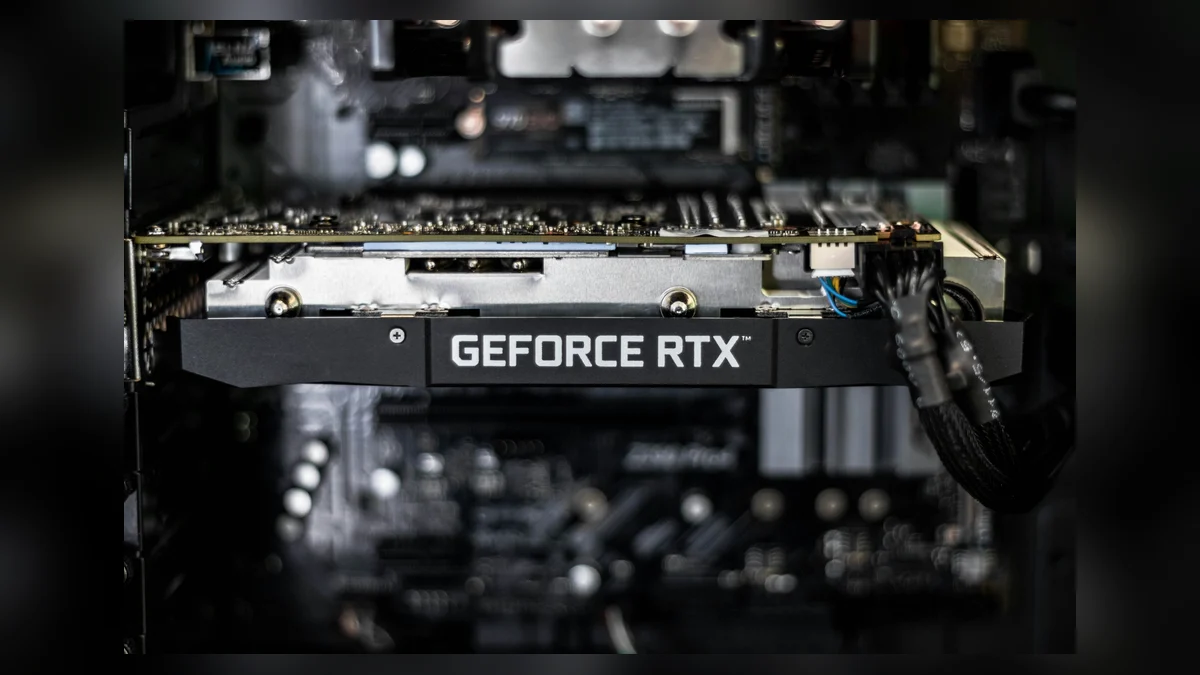
© Photo: Unsplash
Quick Take
Key figures
Why these two cards are compared
For gamers who play at 1440p, a very common resolution for gaming monitors, the choice in 2026 often comes down to two cards at roughly the same price. AMD's Radeon RX 9070 GRE arrived worldwide on June 2, 2026 at a suggested price of $549. Nvidia's GeForce RTX 5060 Ti 16 GB has been on sale since 2025; Tom's Guide listed it at an average of about $569 at the time of its review, and Tom's Hardware said in July that it was selling "for well over $500".
The context matters: memory chips have become much more expensive because of demand from AI data centers. Engadget summed it up by calling 2026 "a pretty bad time to buy hardware", and prices for both cards change from week to week.
Head-to-head
| Radeon RX 9070 GRE | GeForce RTX 5060 Ti 16 GB | |
|---|---|---|
| Launch / reference price | $549 (June 2026) | About $569 average (Tom's Guide, June 2026) |
| Video memory | 12 GB GDDR6, 192-bit | 16 GB GDDR7, 128-bit |
| Rated power | 220 W | 180 W |
| 1440p average (TechSpot, 15 games) | 84 fps, about 25 % ahead | About 25 % behind |
| Upscaling and frame generation | FSR 4 / FSR Redstone, one generated frame | DLSS 4.5, multi-frame generation |
| Best for | Pure gaming performance per dollar | Memory headroom, features, creative and AI apps |
Performance in games
Every review we read agrees that the GRE is the faster gaming card at 1440p. Guru3D, summarising ComputerBase's tests across 13 games, puts its lead over the RTX 5060 Ti 16 GB at 22 %. TechSpot measured about 25 to 26 % across 15 games, with an average of 84 frames per second.
Tom's Guide published game-by-game results at 1440p:
- Cyberpunk 2077 (ray tracing Ultra): 36.6 fps for the GRE vs 32.8 fps for the RTX 5060 Ti.
- Forza Horizon 5 (max settings): 142 fps vs 121 fps.
- Call of Duty (max settings, no frame generation): 136 fps vs 80 fps.
- Black Myth: Wukong (Cinematic): 81 fps vs 45 fps.
Ray tracing used to be AMD's weak point. Tom's Guide now describes the GRE's ray tracing as "solid", and the Cyberpunk result shows it slightly ahead of the Nvidia card.
Where the RTX 5060 Ti still wins
- Memory: 16 GB instead of 12 GB. Demanding games can use more than 12 GB at high settings, which matters if you keep a card for many years.
- Upscaling and frame generation: Tom's Guide says DLSS 4.5 "continues to have a clear lead in feature set and game support". Nvidia's multi-frame generation can add several AI frames, while AMD's adds one.
- Power: 180 W against 220 W, so less heat and a smaller power supply requirement.
- Creative and AI work: reviewers note that productivity and AI performance is weaker on the AMD card. If you edit video or run local AI tools, Nvidia's CUDA support remains an advantage.
The price question
TechSpot was the harshest reviewer: at $549, it judged the GRE poor value next to the full RX 9070, and said it should cost $500 at most. A month later, Tom's Hardware reported the first discount, to $499 at Newegg. Engadget gave the card 8/10 but would not tell readers to "run out and buy" any graphics card right now.
In practice, compare the two cards at the price you can actually pay on the day. At equal prices, the GRE gives more frames; if the RTX 5060 Ti 16 GB is noticeably cheaper, its extra memory and features make it the safer long-term buy.
Which one should you buy?
- You play competitive or demanding games at 1440p and want the most frames: the RX 9070 GRE.
- You keep a graphics card for five years or more: the RTX 5060 Ti 16 GB, for its extra memory.
- You use DLSS in many games, or stream with Nvidia tools: the RTX 5060 Ti.
- You edit video or try local AI models: the RTX 5060 Ti.
- You have a small case or an older power supply: the RTX 5060 Ti, which draws less power.
- You already own an RTX 4060 Ti or RX 7800 XT: wait. The gain does not justify current prices.
Verdict
For gaming alone, the Radeon RX 9070 GRE is the stronger card: every major review measures it more than 20 % faster than the RTX 5060 Ti 16 GB at 1440p, for a similar price. The RTX 5060 Ti answers with more memory, better upscaling, lower power draw and stronger creative tools. Buy the GRE if frames per dollar come first, especially near $500; choose the RTX 5060 Ti if you value features and longevity. For background, read our analysis of high-end graphics cards.
This article analyses reviews published by other outlets, in our own words. RealDigitalTech did not test these graphics cards itself.
Sources
- Tom's Guide — AMD Radeon RX 9070 GRE review (June 2, 2026)
- TechSpot — AMD Radeon RX 9070 GRE review (June 2, 2026)
- Engadget — AMD Radeon RX 9070 GRE review: a cheaper GPU for a wildly expensive era
- Guru3D — AMD Radeon RX 9070 GRE review: 1440p performance (citing ComputerBase)
- Tom's Hardware — AMD RX 9070 GRE drops to $499 (July 11, 2026)
- Notebookcheck — Sapphire Pulse RX 9070 GRE review
How this article was made: our editorial team selected and read the reviews listed above, compared their results and wrote this synthesis, with AI tools assisting the research and drafting. Every figure was checked against the sources, and the article was approved by the publication director. Our AI Disclosure · Our methodology · Report an error: editorial@realdigitaltech.com