
PHONES · COMPARISON
Xiaomi 17 Ultra vs Galaxy S26 Ultra: the camera king against the all-rounder
 By S. Dahani and the RealDigitalTech editorial team
The Xiaomi 17 Ultra has a 1-inch Leica camera, a 200 MP continuous zoom and 90 W charging; the Galaxy S26 Ultra has the S Pen, a Privacy Display and seven years of updates. Which 2026 Android flagship should you buy?
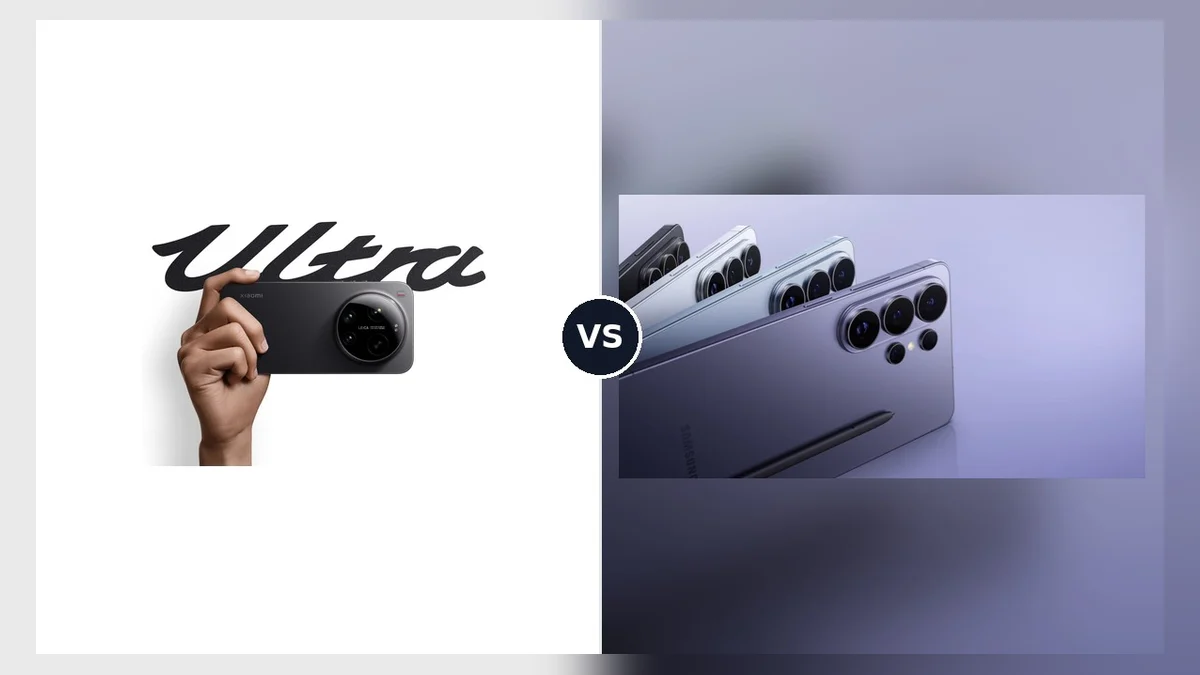
© Xiaomi, Samsung
Quick Take
Key figures
Two ways to build an Ultra phone
The Xiaomi 17 Ultra launched globally on February 28, 2026, and the Galaxy S26 Ultra went on sale in March. Both are 6.9-inch Android flagships powered by Qualcomm's Snapdragon 8 Elite Gen 5, and both cost around €1,500 in Europe. But they put the money in different places.
Xiaomi built a camera first: a large 1-inch main sensor tuned with Leica and a 200 MP periscope with real continuous optical zoom. Samsung built a do-everything phone: two telephotos, the S Pen stylus, a screen that hides your content from your neighbours and the longest update promise on Android.
One important point before comparing: the Xiaomi 17 Ultra is not officially sold in the US. This comparison mainly concerns buyers in Europe, the UK, the Middle East and Asia.
Specs compared
| Xiaomi 17 Ultra (global) | Galaxy S26 Ultra | |
|---|---|---|
| Launch price | €1,499 (16 GB, 512 GB) | $1,299.99 (256 GB) |
| Screen | 6.9-inch LTPO AMOLED, 120 Hz, 3,500 nits peak | 6.9-inch AMOLED, 120 Hz, 2,600 nits peak, Privacy Display |
| Chip | Snapdragon 8 Elite Gen 5 | Snapdragon 8 Elite Gen 5 for Galaxy |
| Main camera | 50 MP, 1-inch sensor, Leica | 200 MP, 1/1.3-inch sensor |
| Telephoto | 200 MP periscope, continuous 3.2x–4.3x optical | 50 MP 5x periscope and 10 MP 3x |
| Ultrawide / selfie | 50 MP / 50 MP | 50 MP / 12 MP |
| Battery | 6,000 mAh (6,800 mAh in China) | Samsung flagship battery; 16 h 10 min in Tom's Guide's test |
| Charging | 90 W wired, 50 W wireless | 60 W wired |
| Water and dust | IP68 and IP69 | IP68 |
| Stylus | No | S Pen built in |
| Software | HyperOS 3 (Android 16) | One UI 8.5 (Android 16), seven years of updates |
Specifications from GSMArena, Android Headlines, Homescreen and Engadget.
Cameras: Xiaomi for the enthusiast, Samsung for flexibility
This is the heart of the duel.
- Xiaomi 17 Ultra: the 1-inch main sensor collects more light, which gives natural background blur and cleaner night photos. The 200 MP periscope zooms optically and continuously between about 3.2x and 4.3x, so there is no jump between lenses. Homescreen prefers the Xiaomi for night shots and Leica-tuned colours. A Leica Edition even adds a mechanical zoom ring. Android Headlines notes one limit: the telephoto cannot focus closer than 30 cm, which rules out macro shots with it.
- Galaxy S26 Ultra: a 200 MP main camera, a 5x periscope and a 3x telephoto, plus 100x Space Zoom. In daylight, Samsung's photos are very detailed, and its zoom range is wider. Video is excellent, with 8K recording and 4K at 120 fps.
Homescreen's conclusion sums it up: the Xiaomi for photographic pleasure and night shots, the Samsung as the universal, reliable choice with the strongest zoom package.
Battery and charging
The Xiaomi's global version has a 6,000 mAh battery (the Chinese model has 6,800 mAh), and Android Headlines praises its long battery life. It charges at 90 W by cable and 50 W wirelessly, but there is no charger in the box. The Galaxy S26 Ultra lasted 16 h 10 min in Tom's Guide's browsing test and charges at 60 W, still fast but slower than the Xiaomi.
Screen and design
Both screens measure 6.9 inches. The Xiaomi is brighter on paper (3,500 nits). The Samsung has a unique feature: the Privacy Display, which hides the screen from people beside you on a train or in an office. The Xiaomi is rated IP68 and IP69, which means it also resists high-pressure water jets. Android Headlines finds its body very slippery, so a case is useful.
Software and updates
- Samsung: One UI with Galaxy AI, the S Pen for notes and signatures, DeX for a desktop mode, and seven years of Android and security updates.
- Xiaomi: HyperOS 3 with its own AI assistant. It is fast, but Android Headlines notes some quirks. Xiaomi's update promise is shorter than Samsung's.
If you keep a phone for five years or more, Samsung's support is a real advantage.
Which one should you buy?
- Photography is your priority, especially at night: the Xiaomi 17 Ultra.
- You want the most flexible zoom and the best video: the Galaxy S26 Ultra.
- You take notes or sign documents on your phone: the Galaxy S26 Ultra and its S Pen.
- You want the fastest charging: the Xiaomi 17 Ultra.
- You live in the US: the Galaxy S26 Ultra, since the Xiaomi is not officially sold there.
- You keep your phone for many years: the Galaxy S26 Ultra, with seven years of updates.
Frequently asked questions
Is the Xiaomi 17 Ultra sold in the US? Not officially. Imported models may lack some 5G bands and warranty.
Which has the better camera? It depends: the Xiaomi for low light and natural rendering, the Samsung for zoom range and video.
Is there a charger in the box? Not with the Xiaomi 17 Ultra; Android Headlines recommends a 100 W charger.
Which lasts longer? Both last a full day of heavy use; the Xiaomi has the bigger battery and charges faster.
Verdict
The Xiaomi 17 Ultra is the better camera phone for enthusiasts, with its 1-inch sensor, continuous 200 MP zoom and Leica colours, plus faster charging and IP69. The Galaxy S26 Ultra is the more complete and safer phone, with the S Pen, Privacy Display, two telephotos, frequent discounts and seven years of updates, and it is the only choice in the US. For more, read our Galaxy S26 Ultra review analysis and Pixel 11 Pro vs Galaxy S26 Ultra.
This article analyses reviews and comparisons published by other outlets, in our own words. RealDigitalTech did not test the Xiaomi 17 Ultra or the Galaxy S26 Ultra itself.
Sources
- Homescreen — Xiaomi 17 Ultra vs Galaxy S26 Ultra (June 25, 2026)
- GSMArena — Xiaomi 17 Ultra (global) review (February 28, 2026)
- Android Headlines — Xiaomi 17 Ultra review
- PhoneArena — Samsung Galaxy S26 Ultra vs Xiaomi 17 Ultra: sample photos comparison
- Engadget — Pixel 11 Pro vs Galaxy S26 Ultra: specs compared (August 12, 2026)
How this article was made: our editorial team selected and read the reviews listed above, compared their results and wrote this synthesis, with AI tools assisting the research and drafting. Every figure was checked against the sources, and the article was approved by the publication director. Our AI Disclosure · Our methodology · Report an error: editorial@realdigitaltech.com